


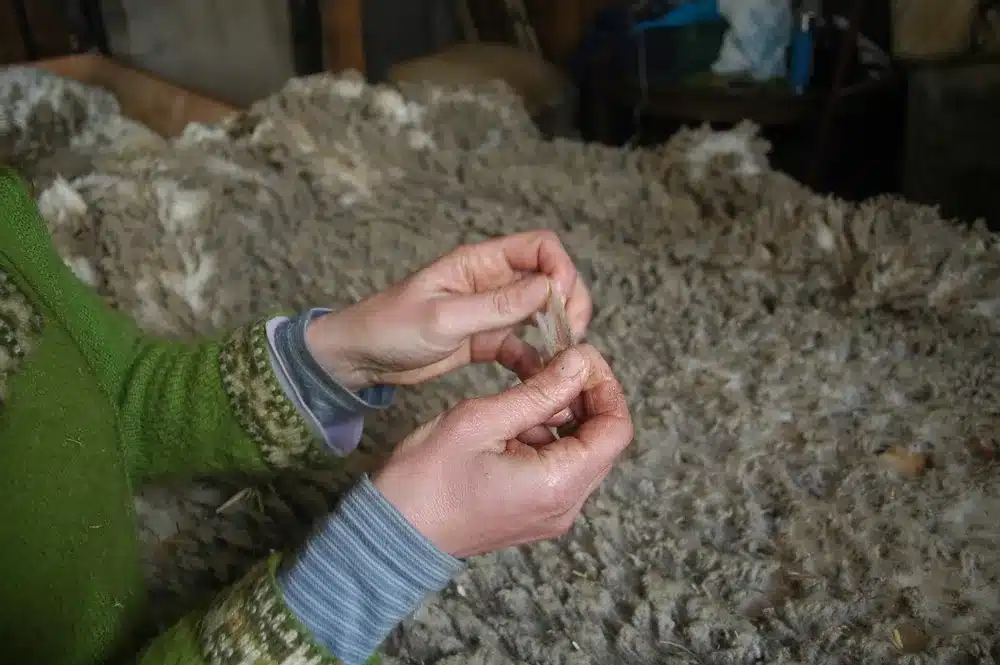
From sheep to hats – The use of wool from yesterday to today
A Common Thread from Past to Future: The Astonishing Evolution of Wool Use
How do you dress for a trip to the mountains? Let me guess: with technical underwear that, let's face it, becomes irretrievably smelly after a few hikes, then a fleece and pants—the kind that dry quickly. In other words, modern, 100% synthetic clothing.
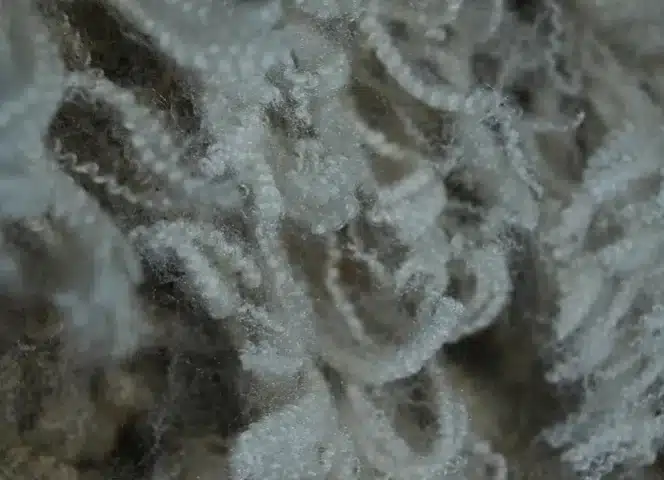
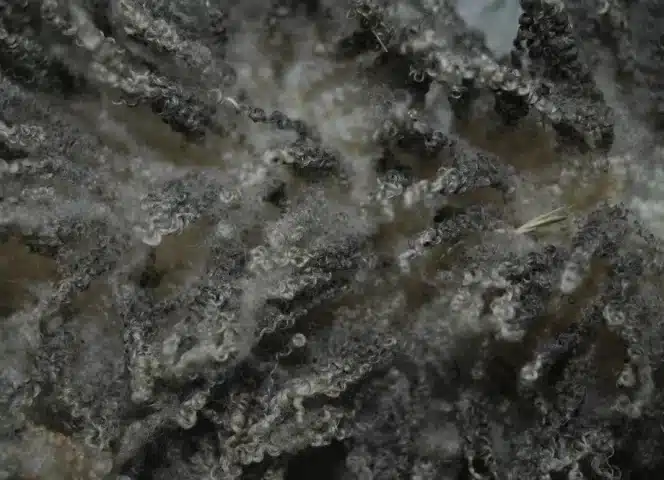
Not because its insulating qualities are unbeatable—any sheep in the mountains will confirm that even when wet, wool keeps you warm—but because mountain dwellers used what they had. Sixty years ago, the people of the valley still carded and spun the wool from their sheep to make clothes, even though it was coarse wool that was a little uncomfortable to wear.
With competition from wool imported from the British colonies, the commercial value of wool continued to decline throughout the first half ofthe 20thcentury. By 1930, only 8% of the wool used by the wool industry was of French origin. Cotton fabrics and then synthetic fabrics gradually replaced wool, offering solutions that were both simpler and softer. Professional spinning mills became rare. Even small family production declined when ready-to-wear clothing entered the scene.


When Charlotte, from the Coursaline farm, arrived at Les Terrasses around fifteen years ago, a lady from the village gave her a ball of vintage wool, the kind that had been spun by the family. With this ball of wool, she knitted her first pair of mittens—which was the beginning of a long journey with wool that led to the selection of sheep with the finest fleece, gradually building up a flock that produces increasingly fine and silky wool.
Since the collapse of the wool market, lamb meat alone ensures the profitability of sheep farming. Shearing has become a burden. Even when wool is sold to be used for insulation or perhaps mattresses, the selling price does not even cover the cost of paying the shearers.
The goal of Charlotte and Mathieu, sheep farmers in Les Cours, Villar d'Arène, is to make more valuable products from the wool of their flock. By transforming it into balls of yarn and technical clothing, they hope to make it a real complement to meat production.
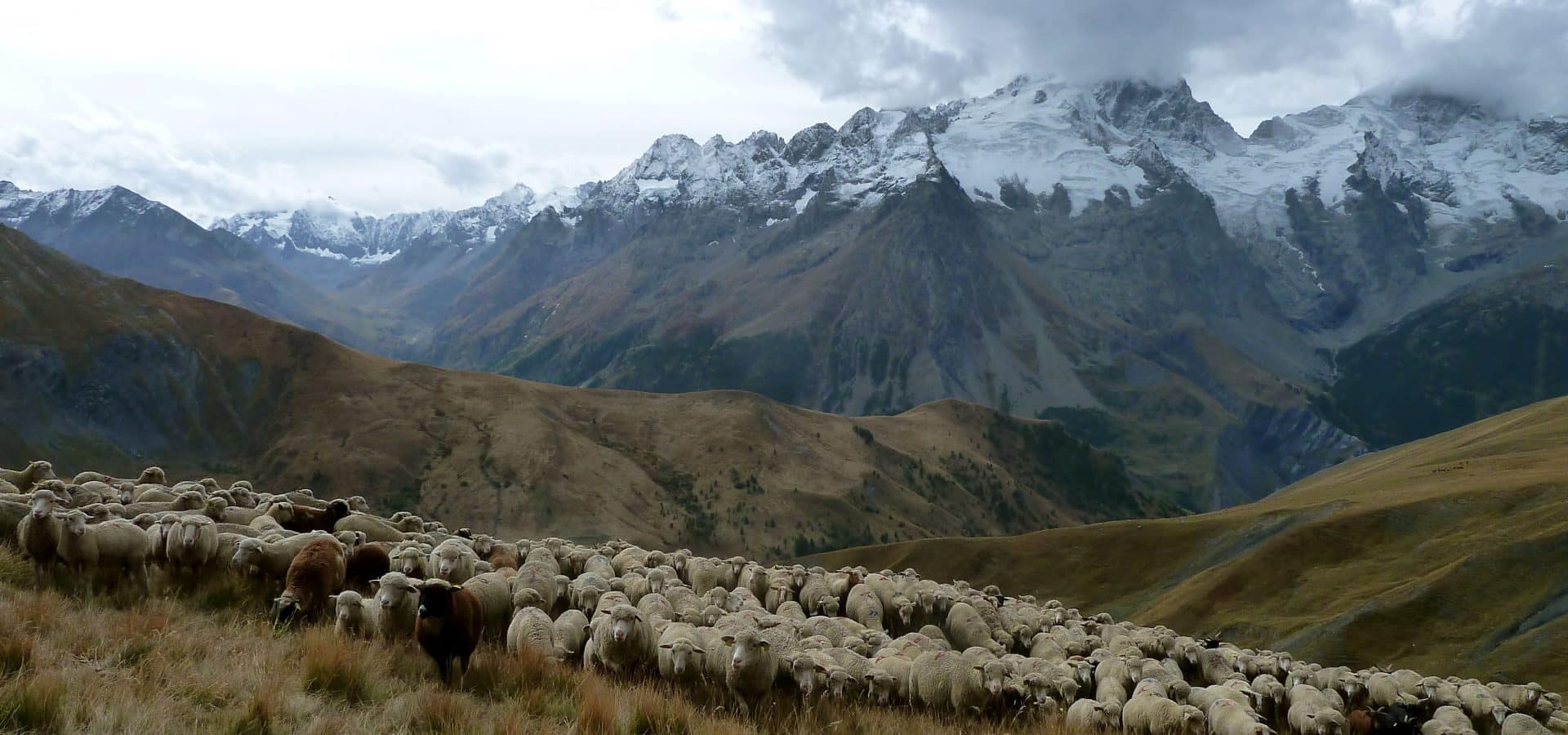
Pierre and Faustine invite you to discover the life of a flock of sheep at high altitude, as well as the professions of farmer and shepherd today in the Cervières Valley, an area of mountain pastures that have been maintained for generations by grazing animals.
Pierre's mother, Bernadette, shows you the different stages of wool processing, as it was done on farms in the old days, from carding to spinning. On the Maison des Bêtes à Laine website, you will find several short clips about life in the mountain pasturesandwool processing.
So what is the path that leads from sheep to hat, especially if the latter must not itch?


This breed is also prized for its hardiness and ability to adapt to different environments, making it the perfect sheep for transhumance. Charlotte and Mathieu initially chose it for these qualities. They later decided to use the wool. They like the idea that nothing goes to waste.
"I look at my sheep differently when I know their wool is going to be used. I check to see if it's beautiful and strong. It's a pleasure to know what it's going to become," says Charlotte.
But with all that, our ears are still cold. All that remains is to turn this beautiful fleece into balls of yarn that can be knitted.


Let's start with spring shearing. Not too late, because the ladies need time to grow back their summer coats for the climb up to the mountain pastures, but before lambing, otherwise the wool may be weakened. Next comes sorting. Any parts that are too dirty or matted from exposure to the elements must be removed.


In Biella, in the Italian region of Piedmont, there is one of the last spinning mills in Europe that still uses the combing process. After carding, the wool is passed through a series of increasingly fine combs to remove all traces of dirt and grass, resulting in a fabric that is soft to the touch. Next, the ribbons are spun and the dye is chosen. The knitting yarn is wound into balls and the very fine yarn is used to make items such as underwear. Now all you have to do is take out your circular or straight needles, depending on your preference, and knit your hat stitch by stitch.


At the Coursaline farm, they also offer, depending on availability, balls of yarn, underwear, and technical socks made from combed merino wool. At the Maison des Bêtes à Laine, you will also find some accessories and clothing knitted by Bernadette.
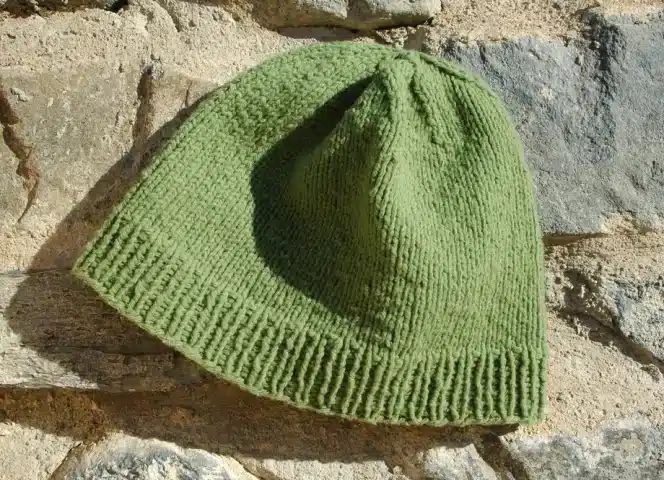
- 1 or 2 balls of carded wool from Coursaline Farm or Maison des Bêtes à Laine, or another wool that allows you to achieve the same tension. Approximately 75 g of wool in total.
- A small circular needle (approx. 40 cm), size 4.5 (or 5 if you tend to knit tightly).
- A set of sock needles, size 4.5
- Gauge to be maintained: 17 stitches x 26 rows = 10 x 10 cm
The hat is knitted in the round on circular needles, changing to double-pointed needles when necessary. Cast on 80-90 sts with 4.5 circular needles. Knit 1 round and continue in 1x1 ribbing for 4 cm. Continue in stockinette and garter stitch. When the piece measures 18 cm, begin decreasing: knit 8 sts, then decrease 1 st by knitting 2 sts together. Repeat until the end of the round. Knit 2 rounds without decreasing. On the next round, knit 7 sts, then decrease 1 st by knitting 2 sts together. Knit 2 rounds without decreasing. On the next round, knit 6 stitches, then decrease 1 stitch by knitting 2 stitches together. Knit 1 round without decreasing. On the next round, knit 5 stitches, then decrease 1 stitch by knitting 2 stitches together. Continue decreasing in the same way until 16–18 stitches remain. On the next row, knit all stitches together 2 by 2 = 8-9 sts. Cut the yarn and thread it through the remaining stitches, pull tight and fasten off. The hat measures approximately 24 cm.
If you lose heart halfway through, it will make a nice scarf!
To learn the basics of knitting, I recommend the link below:
Testimonial: the importance of wool in the past
Jean Louis Sionnet, former farmer and shepherd at Les Terrasses, tells us about a time when wool had a completely different significance.
"When I was five, I went to school here in Les Terrasses. I wore short pants with wool socks that came up to my pants and wooden clogs with nails underneath. Everyone had clogs; they were fashionable. My mother knitted my socks and my grandmother spun the wool. The wool was perhaps a little rough, but we were used to it. Besides, there was nothing else!
At the time, I don't think anyone sold wool, and they didn't waste it either. Each farmer had only ten to fifteen sheep, twenty at most. They collected the wool to make socks, sweaters, and gloves. Hats weren't in fashion. The wool from black sheep was more prized because it didn't need to be dyed. My grandmother had a spinning wheel for spinning wool. She made a very fine, even thread. Then I had an uncle by marriage who took up spinning when he retired. He didn't have any sheep, but people would bring him two or three nice fleeces every shearing season. He wasn't very good at it, so his wool was a little stiff.
When I was a kid, people sheared their sheep in the fall, just before they were brought into the barn. That way, the wool was cleaner, without any bits of straw in it. They washed the wool in rivers or streams. I remember when my grandmother carded her wool, it came out nice and fluffy. The cards were fitted with twisted nails to untangle the wool. Then it had to be spun on a spinning wheel. After my grandmother died in 1955, we stopped spinning wool at home. My mother had asthma and spinning created too much dust for her. But others continued for longer. Then nylon came along, and people no longer wanted to use wool."


Little by little, everyone in the village stopped using wool from their sheep. Instead, they sold it to merchants who came to collect it. Jean Louis and his wife Monique took over their parents' farm in the 1970s. They always sold their wool. The only difference was that, in the beginning, it was worth a little more. Jean Louis was also a shearer. At first, he and his brother would go shearing around Grenoble. As payment, they would collect wool, which was worth a little more than their usual pay. The price quickly dropped. And in some years, no one even wanted to buy the wool. So, some people threw it away."The sheep had to be sheared anyway,"concludes Jean Louis. "I remember that my grandfather even sheared a dead ewe. For him, wool had real value."
You might also like

What to do during a summer week with the family in Clarée?
See more
2 days of ski touring adventure from Paris
See more
De l’oubli à la rénovation : l'histoire du moulin de Sachas
See more
Top 5 des expériences insolites à vivre en hiver dans les Hautes Vallées
See more