


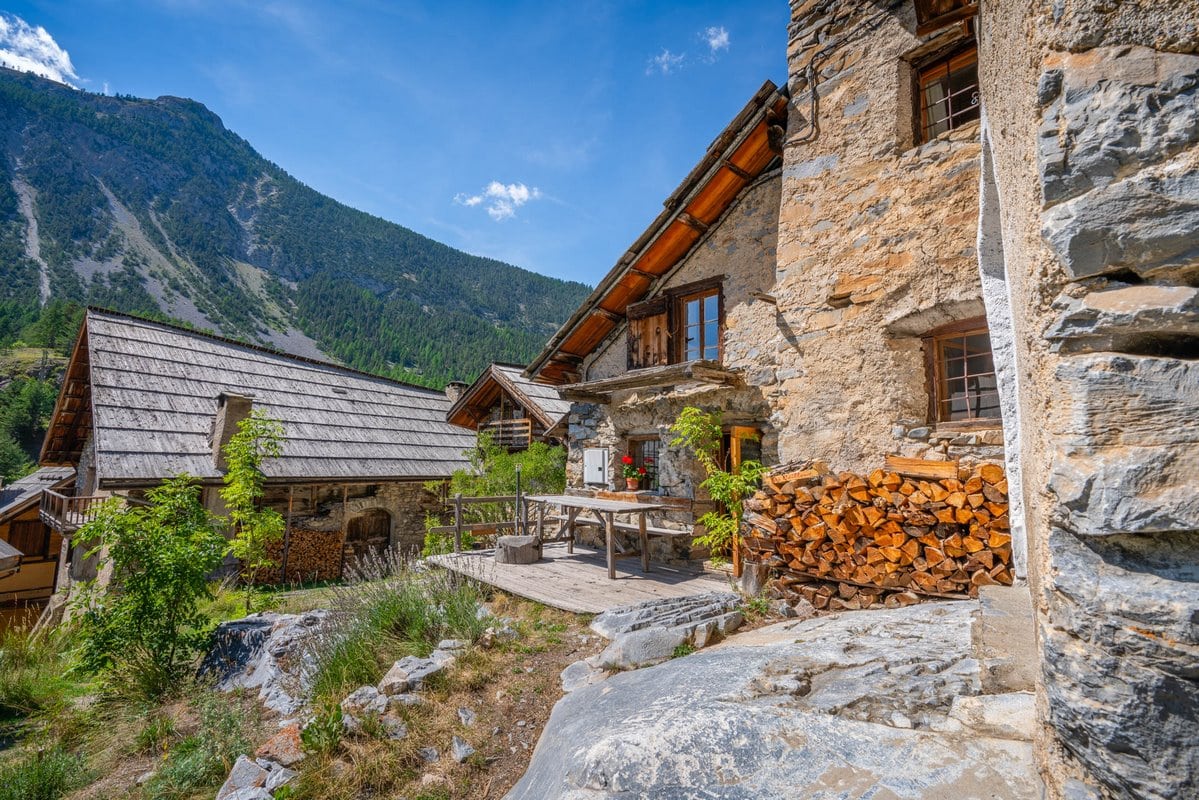
Do you know... Plampinet?
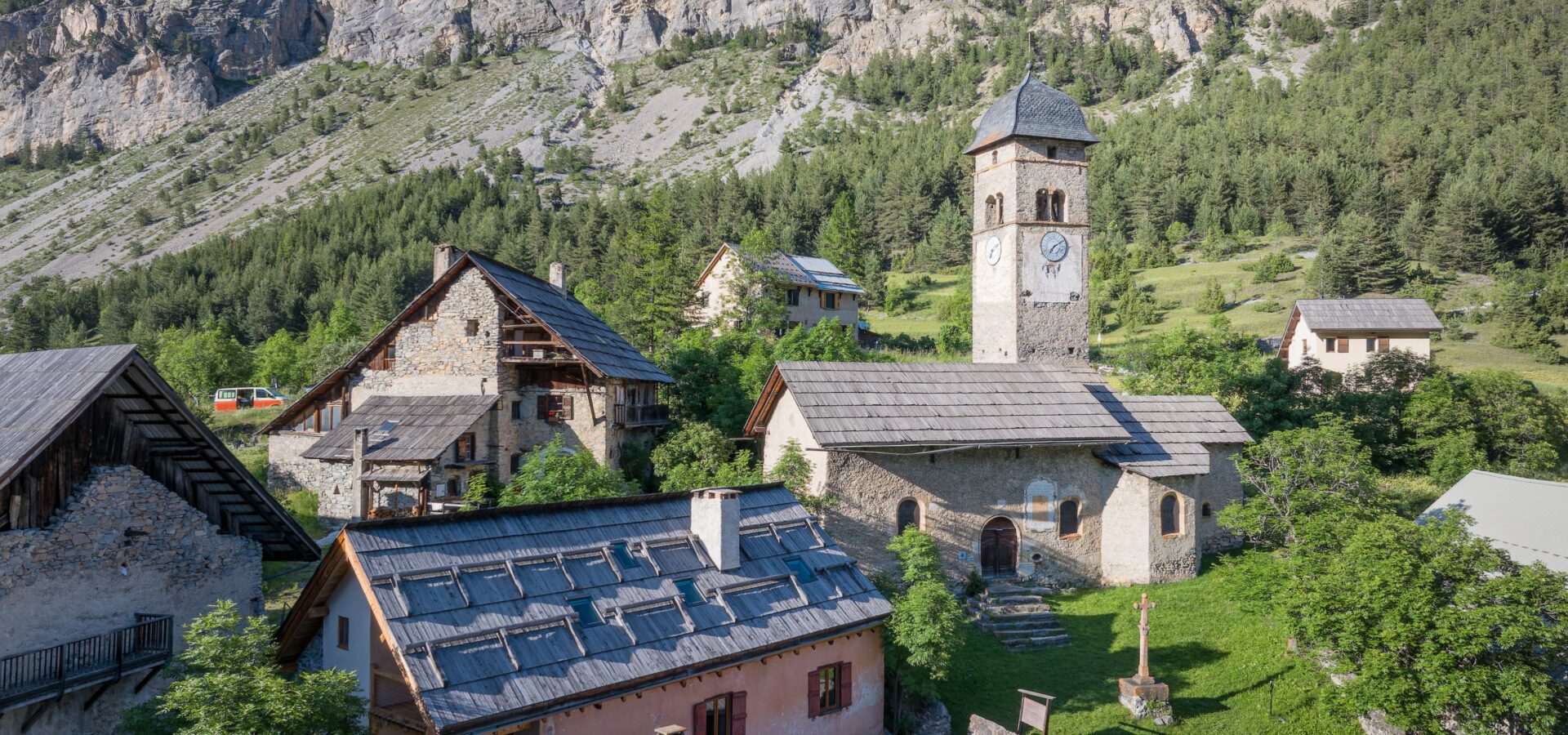
The first of the eight hamlets of Névache in the Clarée Valley, Plampinet is a small, authentic hamlet, perfect for spending a few days simply enjoying yourself: hiking, discovering local producers, or exploring the area's heritage with the Church of Saint-Sébastien or the Chapel of Notre-Dame-des-Grâces.
Welcome to Plampinet
At the bend of a winding road lined with larch trees, Plampinetreveals itself as a hidden treasure in the heart of the Clarée Valley. This picturesque hamlet seems frozen in time, with its weathered stone and wood houses, flower-filled meadows, and the soothing murmur of the Clarée River running through it. Here, the mountains are not just a backdrop, they are a living presence, an invitation to an inner journey.
Plampinet offers much more than just a stopover: it is a timeless interlude, where nature and authenticity come together in perfect harmony.
Hikes starting from Plampinet
Here, you don't need a car to explore a multifaceted destination.
Discover the treasures of the local heritage, explore the GR5 trails, climb up to the Col de l'Échelle, Col des Acles or Col du Guion for breathtaking views of the surrounding mountains, and on the way back, treat yourself to a gourmet break in one of the village restaurants.
Those interested in panoramic views or military history will want to visit the 19th-century forts located on the ridges separating the Clarée and Guisane valleys: Fort de l'Olive and Fort Lenlon.
The most adventurous can take a long hike around the pass and Lake Oule for an unforgettable adventure.
Fort de l'Olive
This 19th-century fort perched on the Rocher de l'Olive offers an incomparable panorama of the Clarée, the Col du Granon, the Acles, and the Échelle.
Hiking – The Olive Fort
From Plampinet to Val des Prés
For a family walk along the river to discover the Clarée between fields and forests.
Walk between Val-des-Prés and Plampinet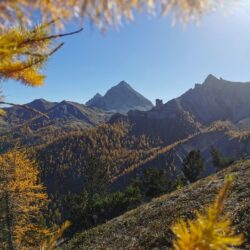
The Guion Tour
This long hike, which begins largely in the forest, will allow you to discover the wild Acles Valley before crossing the Italian border via the pass of the same name.
The Guion Tour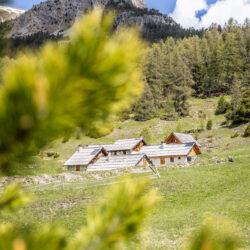
Col and chalets of Les Acles
Far from the crowds, this wild hike will take you through the magnificent Acles valley.
Les AclesCLIMBING and CANYONING


Rock climbing in Plampinet
Around Plampinet, you will find several climbing sites: Le Rocher qui Répond, La Bruzza, La Grotte, and La Falaise des Écureuils, with a total of more than 100 climbing routes ranging from 3C to 8A.
Acles Canyon
The Canyon des Acles, behind the village of Plampinet, offers refreshment on hot summer days, while getting your adrenaline pumping with slides and abseiling down waterfalls. Set off with our activity providers and enjoy thrilling outings in this wild canyon.
Learn more about rock climbing and canyoning
TREASURES OF PLAMPINET'S HERITAGE
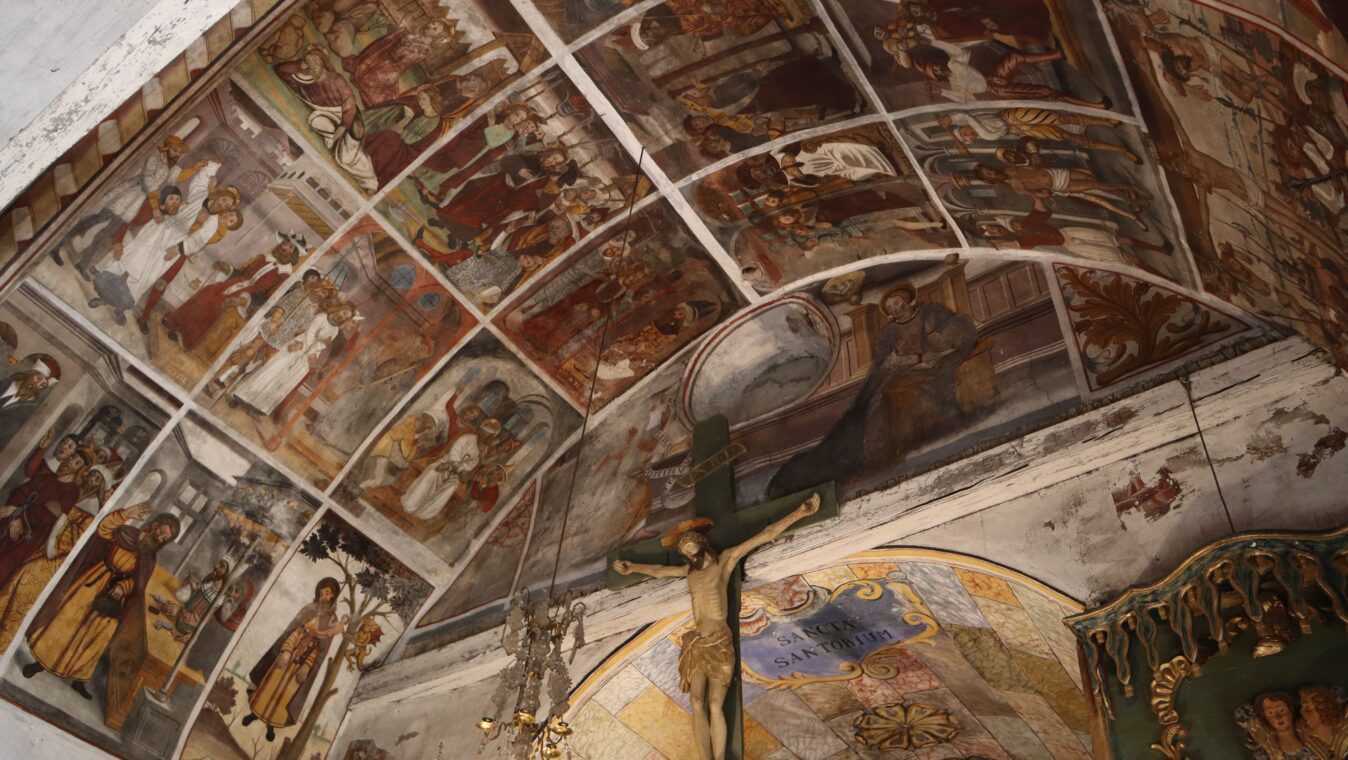
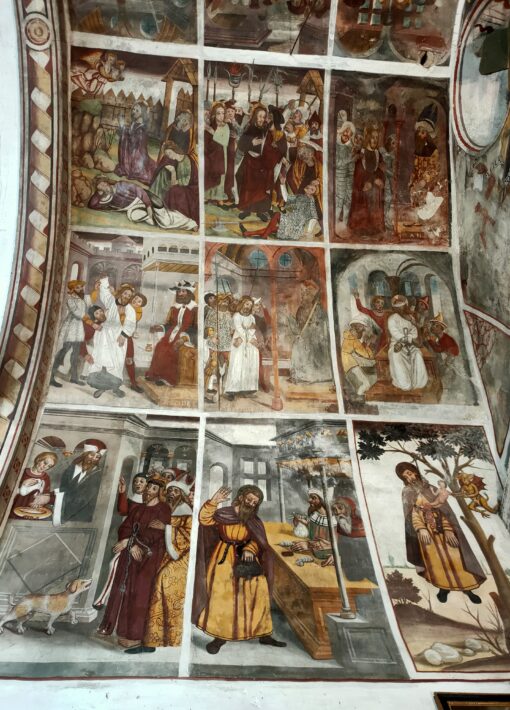
Exceptional frescoes
Elsa Giraud, historian atthe Atelier d'Histoire, opens the doors of Saint-Sebastien Church in Plampinet to reveal a rare and remarkable fresco depicting the Passion of Christ.
Watch our video.
As soon as we arrive, our eyes turn to the Chapel of Our Lady of Grace (15th century) and the Church of Saint Sébastien (16th century, consecrated in 1532), both of which are listed as Historic Monuments. Their interior frescoes, depicting the Passion of Christ and dating from 1550, reflect the need to impose the biblical message in the face of the rise of the Waldensian movement. Virtues, vices, and punishments are all represented in the chapel. These paintings, which enabled the entire population to understand the Christian message, were done "a fresco," that is, on fresh plaster, to ensure their durability. The proximity to Italy is evident in this technique, which is specific to Italian painters.
Around 1630, Michel Vallier de Plampinet left for Piedmont, where he learned how to cast bells. Upon his return home, he set to work. The Valliers cast the chapel bell in 1761 and the church bells in 1731 and 1749. They cast thousands of bells in several regions of the Alps between 1630 and 1880. The largest bell cast by the Vallier dynasty is located in the Cathedral of Susa in Italy.
Like many houses in the village, the church bell tower also has a sundial, located above the entrance porch. Its motto is "Remember your final hour and you will never sin."It dates from 1823 and is signed by Hippolyte Laurençon, a painter born in the village.


FARMHOUSE GOAT CHEESES


AND IN WINTER?

In winter, you can put on your snowshoes or cross-country skis and head off to explore the other hamlets of Névache, through woods and fields and along the river.
You might also like

From la Grave to la Clarée - The story of an itinerary
See more
Winter break with friends in the Clarée Valley

Hiking with your dog in the High Valleys
See more
10 Good Reasons to Choose Grave in Winter
See more