


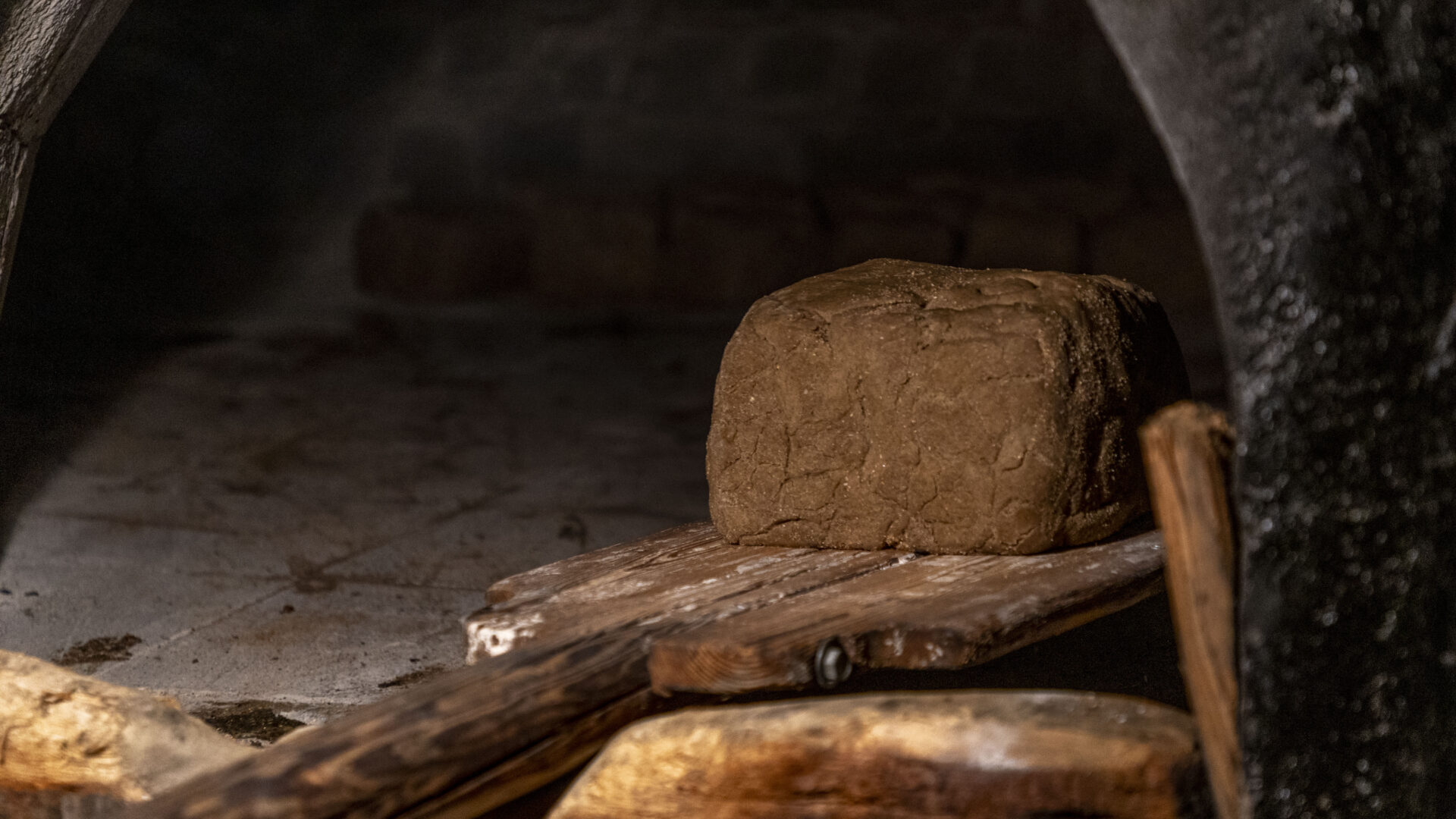
Boiled bread in Villar d'Arène in the Hautes-Alpes
November 7, 2025Traditions and cultural heritage are deeply rooted in the daily lives of the inhabitants of La Grave and Villar d'Arène. Every year, in the villages and hamlets of the Pays de la Meije, an ancestral tradition is perpetuated. Here, you will find everything you need to know about the tradition of black bread in the canton of La Meije. Enjoy your discovery!
Once upon a time The tradition of "Pô Buli"
As wood was scarce, the oven was lit for a single batch: the annual bread. It was a serious business: families could not afford to mess up the bread for a whole year, at the risk of wasting the effort, wood, and flour used. Quarrels were put aside to focus on the essential: making good black bread.
This tradition, unique to the canton, continues to this day. Every weekend in November, just before the first snowfall, the hamlets of Ventelon and Le Chazelet and the village of Villar d'Arène relight their communal ovens and work hard for several days to perpetuate this ancestral craft.

A little preview in video format
Watch our video to discover all the steps involved in making black bread.
anancestral recipe ancestral


Every year, the Villar d'Arène oven comes to life thanks to four batches, each consisting of three kneading machines. This tradition brings the community together around ancestral know-how, where organization is key to optimizing the use of the oven without overloading it.
Bread making follows a rigorous process involving four main steps:
- Sourdough starters: synchronized mixing with two sticks to ensure ideal fermentation.
- Kneading: each team positions itself around its kneading trough to shape the dough, which consists solely of rye flour mixed with boiling water, hence its name "bouili" (boiled). The bread is salted only with the sweat of the participants' brows. The dough must rest in the corner of the kneading trough closest to the central stove so that it "rises."
- Baking: the bread is placed in the oven on the end of a long peel to ensure even baking.
- Taking the bread out of the oven: the eagerly awaited moment when the loaves are removed and taken to "paradise."
At the head of this organization like a true conductor, the baker monitors the oven temperature and the quality of the baking throughout the weekend.
A littleelbow grease

hands in the dough
Once the dough has rested sufficiently, it is cut with a spade into large portions weighing around 5 kg. These imposing balls are passed from hand to hand in a beautiful collective choreography to the large wooden table, where they are carefully shaped.
To distinguish each kneading trough, the bread balls are then marked with a distinctive pattern specific to each team. These marks make them easy to recognize once they come out of the oven.
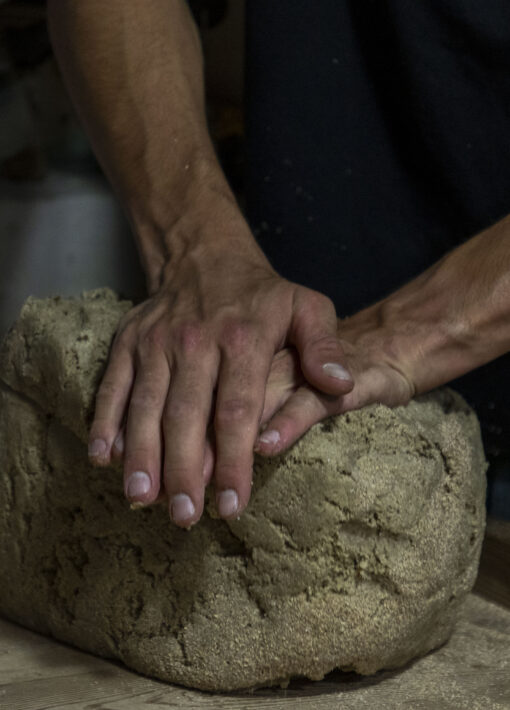
we put in the oven
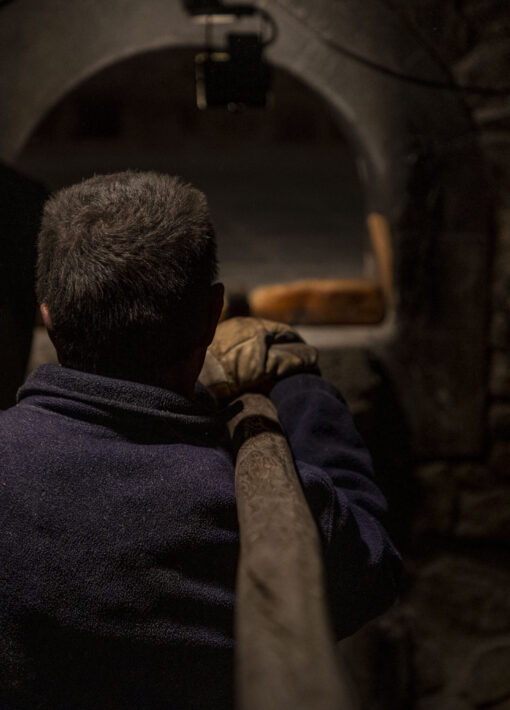
hot front
Once these first batches have come out of the oven, it's time for the bread. Every movement is precise, because the spacing and arrangement of the loaves in the oven is not left to chance: it directly influences how they bake and the thickness of the crust. Once each loaf has found its place, the oven door is closed for 7 hours.
we take out of the oven


Heading to paradise
After seven hours baking in the oven, the loaves are removed one by one. They then begin a new ballet, passing from hand to hand until they reach "paradise," a room located just above the oven, nicknamed "hell." In this slightly cooler refuge, the loaves are laid out to cool slowly. This contrast between heat and coolness allows the bread to develop its golden crust and irresistible aroma.
do "left-handed"


Small pleasure
In the kneading room, a festive atmosphere takes hold around an old local tradition: "faire gauchette."
A candle is attached to an empty wine bottle, and everyone joins in the fun. A piece of bread is dipped in brandy, quickly passed over the flame to set it alight, then eaten while still burning, with caution and bravery. This warm and friendly ritual is an opportunity to share laughter and stories!
Enjoy however you like

In the past, our ancestors had their own tricks: cut into small pieces, it was stored in metal boxes and taken out to be dipped in soup or milk. Others preferred to "chew" it straight from the crust, nibbling on a piece during long days in the fields.
Today, the country's children, raised on black bread, each have their own technique and preference. Some cut it with a band saw—fresh but just hard enough to prevent it from sticking. Others slice it carefully and freeze it to preserve it longer.
When do we honor it? At snack time with honey, at Christmas with salted butter and oysters... Everyone has their own trick. What about you? What will yours be?
What's more, the Villar d'Arène furnace is open to visitors!
Thenext day's meal


Armed with his long-handled shovel, the baker carefully arranges the dishes and pizzas, while monitoring their cooking. The bottom of the oven, where the heat is most intense, is filled first. This area requires extra vigilance to prevent the food from coming out charred. Each pot and pan is placed with precision. There's no question of the lids coming off! Each family takes care to mark their pan and seal the lid with wire (yes, string can't withstand such heat).
In addition to delighting food lovers, this first baking has a technical function: it provides just the right amount of moisture in the oven, creating the ideal conditions for the breads to come.
Tradition dictates that the next day's meal be shared with the family around freshly cooked dishes.
I want to make a cabbage pie
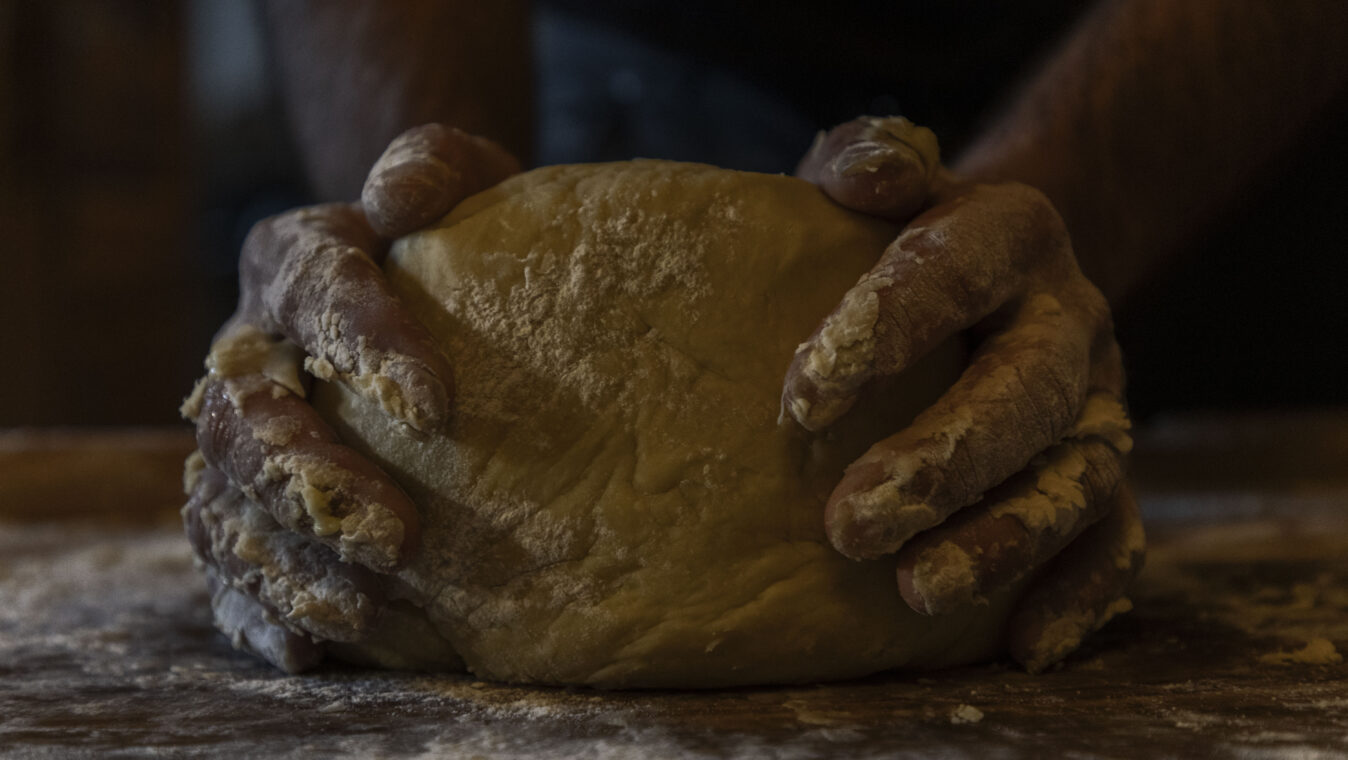
recipe from grandma
Ingredients
Shortcrust pastry (4 balls) proportions for one ball
- 300 g flour
- 150 g cold butter
- 2 pinches of salt
- 65 g cold water
Filling:
- Raw cabbage (generous amount, as it reduces during cooking)
- Bacon bits fried in a pan (set aside)
- Onions sautéed in a pan (set aside)
- 2 bowls of cream
- 2 eggs (varies depending on the dish used, see tips)
Tip for cream/egg proportions:
- For a small dish, use 1 cup of cream and 1 egg.
- For a larger dish, adjust the quantities accordingly.
Preparation
- Prepare the shortcrust pastry
- Mix the flour, cold butter cut into cubes, and salt to obtain a sandy texture.
- Add the cold water little by little and form a ball of dough. Repeat to make 4 balls. Set aside in a cool place.
- Prepare the filling
- Slice the raw cabbage thinly and use a generous amount (cabbage shrinks considerably when cooked).
- Sauté the bacon and onions separately, then set aside.
- Assemble the pie
- Roll out one ball of dough for the bottom of the dish and another for the top.
- Fill the bottom of the pastry with the ingredients: start with the cabbage, then add the bacon and onions. Mix the cream and eggs according to the quantities needed for your dish and pour this mixture over the filling.
- Close the pie
- Roll out the second ball of dough to cover the pie. Seal the edges well to ensure a perfect seal. This guarantees optimal cooking with steam retained inside.
- Cooking
- Follow the recommendations for your oven or traditional cooking method.
Tips
- Be careful with the amount of cabbage: make sure you use enough, as it shrinks considerably during cooking.
- Seal the dough well: a tightly sealed pie gives better results by retaining moisture and flavors.


You might also like

Découvrir Névache dans les Hautes Vallées
See more
Alex Hugo: Samuel le Bihan in the High Valleys... in Lusagne!
See more
Les coups de cœur estivaux de l'équipe

Petite Ferme des Regains - The educational farm showcasing Alpine traditions
See more