


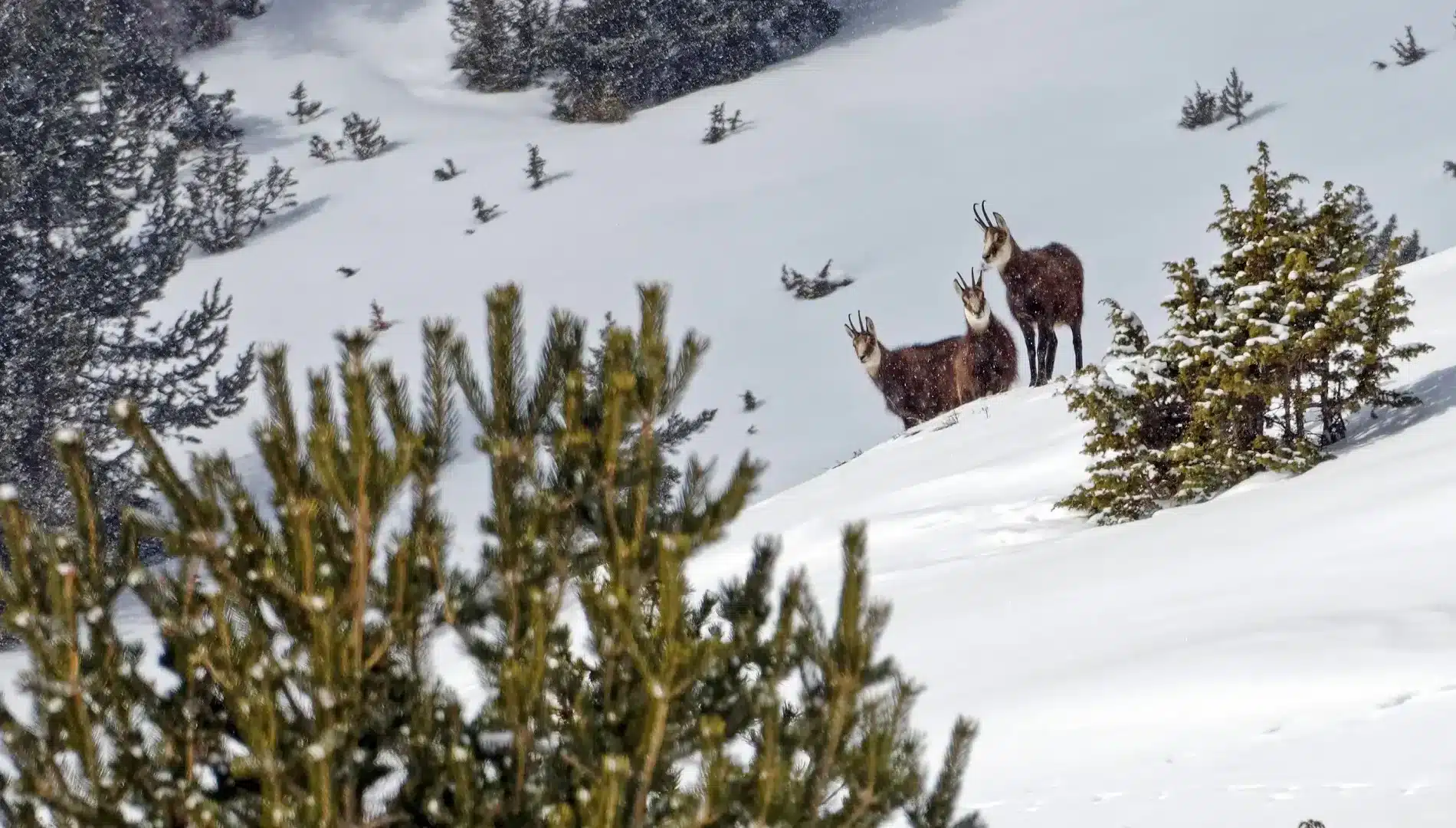
Learn to recognize tracks and observe wildlife in winter
March 4, 2025How can you observe a chamois? Who left these tracks in the snow?
It's an encounter that everyone hopes to have at least once in their lifetime: the chance to see animals in their natural habitat. But it's not just a matter of luck. To help you in your quest, here are some tips and tricks for observing the wildlife that inhabits the Hautes-Alpes.
When you're out and about, keep your senses alert. The rustling of wings. A branch creaking. A "little black dot moving" in the heights. Grab your binoculars and discover the wildlife hiding in these snowy landscapes.


What animals can be seen in the High Valleys?
The list is long! But to name a few...
The emblematic animal of the High Valleys is the chamois. In the Clarée Valley, you may also encounter ibex. Both mountain hares and European hares live side by side in our mountains. And let's not forget the fox! Don't expect to see any marmots in winter, as they hibernate in the warmth...
A multitude of birds inhabit the Hautes-Alpes:golden eagles, black grouse, fieldfares, crossbills, etc.

professional advice
5 tips in brief:
- Leave early
- Be quiet and discreet
- Take a pair of binoculars
- Observe slopes where there is less snow
- Leave your dog at home
For more details, watch this video to learn how to observe wildlife with Tanguy Trompette, a mountain guide in the Hautes Vallées region with Terres de Trek.
Encountering a wild animal is a bit like finding the Holy Grail. But during your winter outings, you pass by lots of clues about wildlife without even realizing it! That's the advantage of the snowy season: footprints in the snow allow us to understand the lives of the mountain's inhabitants.
"Just by looking around at what's on the ground, we can discover a whole page of what they experience on a daily basis."


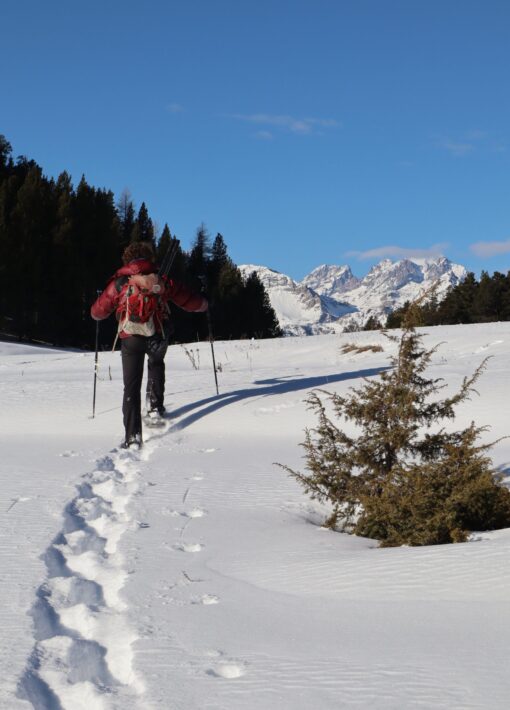
tutorial recognizing animal tracks
Watch our video.
caution winter disruption
Winter is a difficult time for animals in the mountains. Some species are more vulnerable due to the cold, lack of food, and difficulty moving around in the snow, as Tanguy Trompette explains, using the example of the chamois:
"In winter, he will only be able to eat very little, with food that is scarce and rather poor because it is dry. So his diet is just enough to meet his basic metabolic needs, which is what we do when we stay on the couch and relax. But he doesn't stay on the couch; he has to move around to find food. Moving around in the snow takes a lot of energy. So if, on top of that, we force him to move away from us, he'll start to draw on his fat reserves. And his fat reserves are his survival capital! So we really need to try to avoid disturbing him as much as possible by using optical instruments. The last thing you should do is get close to take a photo. Either use a camera with a very long focal length, or look through binoculars, observe, admire—it will be much better for them!"

You might also like

My first time snowkiting at the Col du Lautaret
See more
Night in a mountain hut, do you know how to do it?
See more
9 activités créatives à faire avec des enfants à la montagne

Pierre-Louis tells us about his mountain
See more